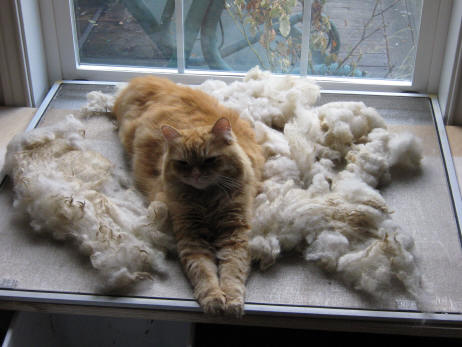
 This is what I found in the morning on my freshly washed wool!
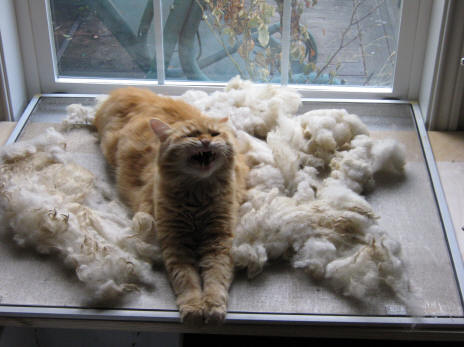 Yawn and stretch, wasn’t that a great night’s sleep?!
  This is what I found in the morning on my freshly washed wool!Yawn and stretch, wasn’t that a great night’s sleep?!
 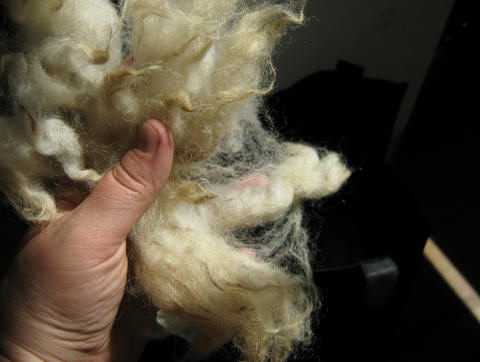 So here’s a nice climp of washed wool, and you can see how it naturally falls into locks.
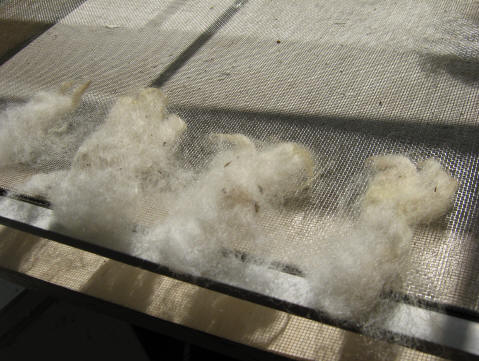 Here’s a few locks separated out. They are only about four inches long.
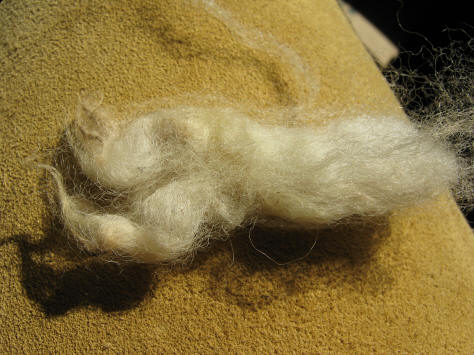 I have a small square of leather I put on my knee and set one lock on there.
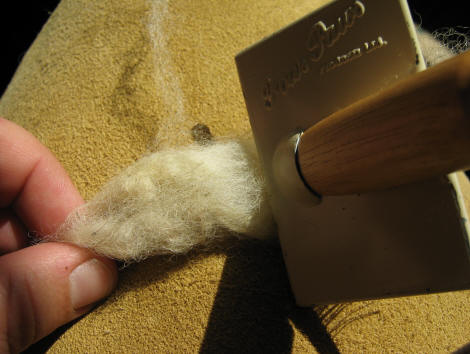 I hold one end of it, and brush out the other end with a small slicker brush, flicking the fiber. This loosens up the wool, and gets out any remaining debris.
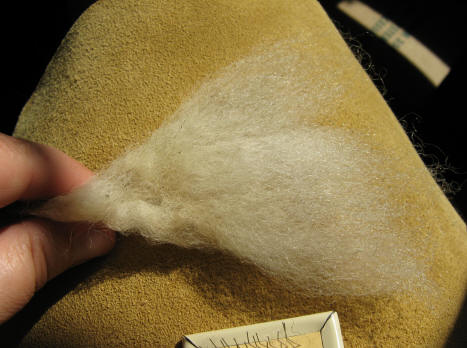 Here’s how it looks flicked.
 Turn it around and grab the flicked end, and do the other end.
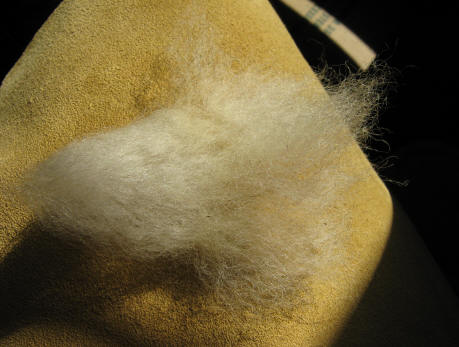 Now the whole lock has been flicked.
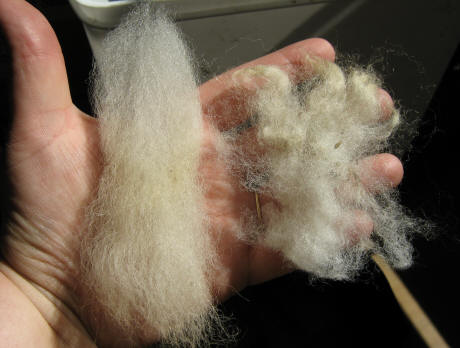 A flicked lock compared to one that hasn’t been flicked yet – you can see how loose and fluffy it is now.
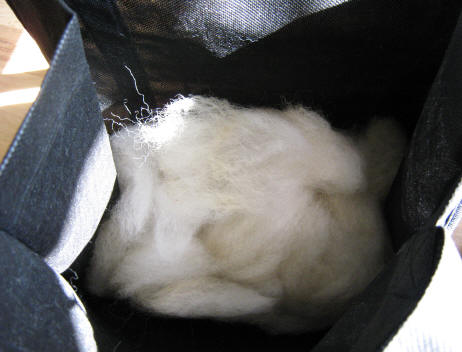 All the flicked pieces go in a bag together and eventually they will be combined in the next step – carding. The flicking process separates the good wool from the broken bits, the little tufts where the shearer had to cut twice to get down to the skin, and the pieces that are just too dirty to use. Quite a bit of wool goes in the garbage at this point, but the stuff that is left is really nice. I have only washed about a third of Mom’s wool, so I have quite a bit to go – and then I can start on Al’s wool! There’s no shortage of fiber to play with here.
Although flicking each individual lock sounds tedious, it actually is relaxing, and goes quite quickly. I like to think about pioneer women while I flick out the locks, and wonder how it felt to be working with the wool from your sheep and wondering if you had enough to make hats and mittens to keep everyone warm through the winter. We do it for fun, but our forefathers (or foremothers I should say) had to know how to spin for survival. It’s amazing to me all the skills they knew that we have lost!
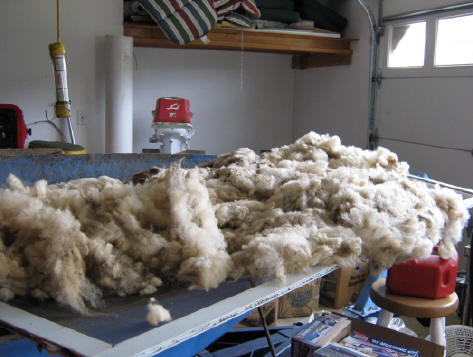 I’ve been looking forward to this project for a while, and believe it or not opening our new retail store has given me free time during the day – time when I am stuck sitting at the store with nothing to do. Time I could be working on my spinning! So I went out to the garage where Mom’s wool has been airing out on a screen for a month or more – it was pretty rank! I spent a bit of time pulling off the poopy bits.
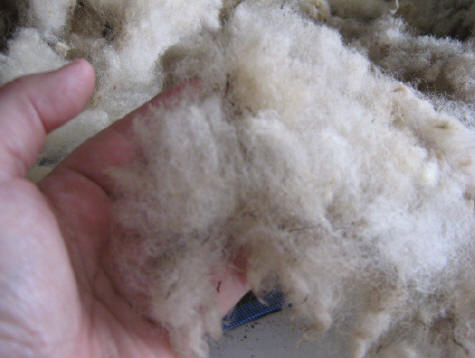 The wool that is left looks good, but it has a lot of dirt in it. Sheep also have a natural lanolin on their wool so it feels greasy. Removing the dirt and grease is called ‘scouring’ the wool. Luckily, one of the ladies in the llama club who has many years of spinning experience invited me to her house for a lesson in scouring and beginning spinning, so I think I know what to do!
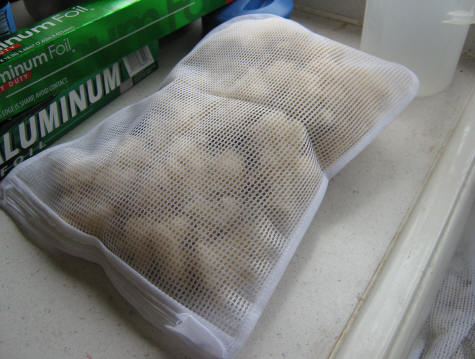 So I put a nice square foot of it in a laundry bag. Then I filled the kitchen sink with HOT water, a splash of Dawn, and some Boraxo.
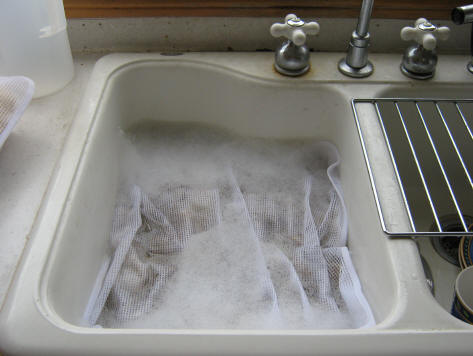 Mixed it all together and then gently set the wool in the hot soapy water.
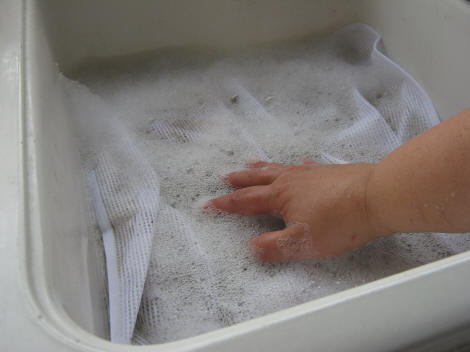 No rubbing, I just pressed it down into the water. Rubbing will turn it into felt. I left it to soak for 20 minutes.
 Eww, that water is disgusting! Who would think that wool was that dirty? I should go give my sheep a bath! Or at least give them one before they get sheared next year!
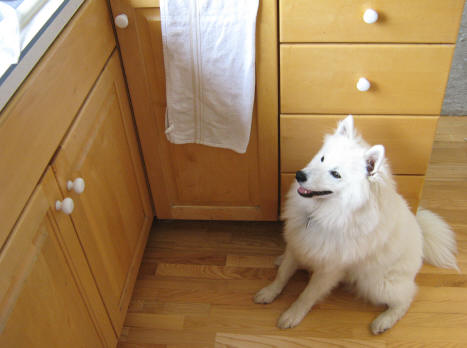 Barclay says ‘mmmm, the kitchen smells like sheep…’
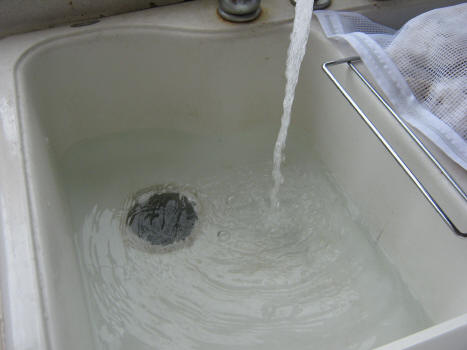 More hot water. Rinse and repeat. Three times until the water looked clean.
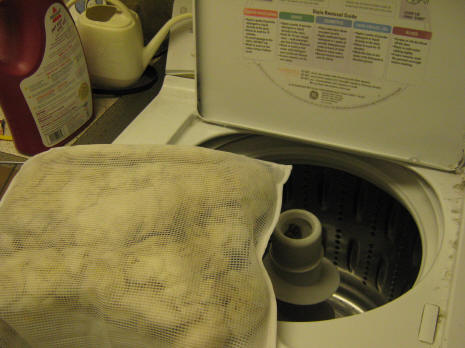 Then I had a bag of wet wool. So I took it to the washer, and set it on Spin, and let it go for three minutes. I pulled it out and the bag was two pounds lighter!
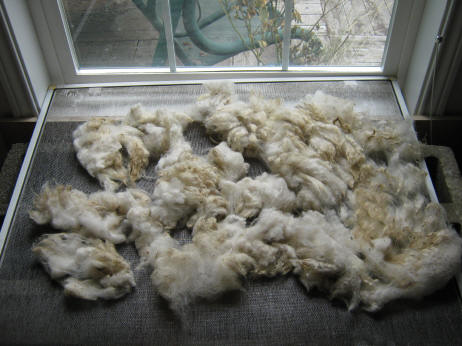 After the spin cycle the wool was just damp, so I set it on a screen in the fish room to dry. By evening it was dry and ready for step two. More on that later. Right now there’s a lot more wool to wash!
On Thursday the shearing guy came over and did Al and Mama sheep. It was amazing. He rolled them over and did their bellies, and then he just worked his way around until the wool was off in one big sheet. The sheep just lay there and let him do it, but they’re very happy to leave when he’s done!
 Before
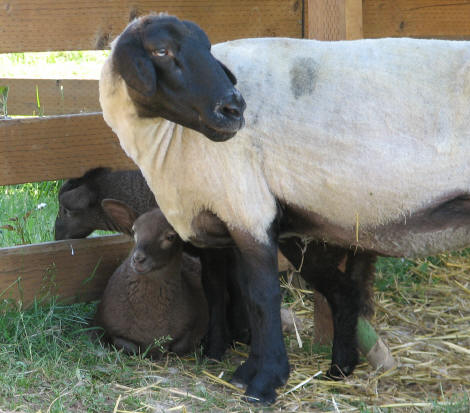 After
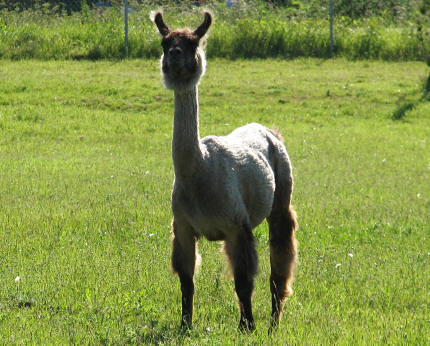
AfterWe couldn’t catch Houdini the llama, but Friday we finally cornered him and got him haltered up. He came back and sheared Houdini, with me and my husband holding him down by the ears. Really, when they start getting contrary, you grab an ear and twist and they suddenly become more compliant (I would too). But it was important that he hold still to avoid getting hurt by the shears, and it was important he be sheared to avoid heatstroke this summer. So we twisted his ears and he survived it all just fine. Though he’s still holding a grudge. I can’t blame him, llamas look ridiculous when they’re sheared.
Now, what will I do with three big bags of wool?
 Steff Does Stuff!